
Why Chicago Reversed the Chicago River (And Made Everyone Else Mad About It)
Chicago once decided to make a river flow backwards. On purpose. The Chicago River reversal is one of the most audacious engineering projects in American history. And it worked.
Not metaphorically backwards. Not “we improved the flow” backwards. Literally reversed the direction of an entire river system because the city had a sewage problem and the solution was, apparently, to make it someone else’s problem.
This is peak Chicago energy.
The Crisis: When Your Drinking Water Becomes a Health Hazard
Let’s set the scene. It’s the late 1800s, and Chicago is exploding. The population goes from about 30,000 in 1850 to over 1 million by 1890. That’s a lot of people, and they’re all doing what people do—eating, drinking, and producing waste.
Here’s the problem: the Chicago River flows into Lake Michigan. Lake Michigan is where Chicago gets its drinking water. You see where this is going.
The city was essentially creating a closed loop system where sewage went into the river, the river dumped into the lake, and then the city pulled drinking water back out of that same lake. Intake pipes were only about two miles offshore, which sounds far until you realize the river was pumping sewage directly into the lake every single day.
The result? Typhoid. Cholera. Dysentery. Between 1885 and 1900, Chicago had multiple disease outbreaks that killed thousands. After a particularly devastating typhoid outbreak in 1885, the city tried extending the water intake pipes further into the lake. It helped, but it wasn’t enough. The river was still dumping sewage into the same body of water where families were swimming and the city was drawing drinking water.
Engineers and city planners looked at this situation and thought: what if we just… made the river go the other way?
The Chicago River Reversal: An Audacious Plan

The idea was simultaneously brilliant and insane. Instead of letting the Chicago River drain into Lake Michigan, they’d make it flow away from the lake—south and west toward the Des Plaines River, which eventually connects to the Illinois River, which flows into the Mississippi River.
The mechanism? Dig a canal. A really, really big canal.
The Chicago Sanitary and Ship Canal would be 28 miles long and, at the time of construction, the largest earth-moving project in American history. They moved more earth for this canal than was excavated for the Panama Canal. Let that sink in—Chicago’s sewage solution involved more digging than connecting two oceans.
Construction started in 1892 and took eight years. They used steam shovels, dynamite, and thousands of workers. The canal was designed to be deep enough and wide enough that the sheer volume of water flowing through it would create enough force to literally reverse the river’s flow.
The city sold it as a public works project. Clean water! Disease prevention! An economic boon because, hey, it’s also a shipping canal! Everyone wins!
Well. Not everyone.
The Drama: When Your Neighbors Realize You’re Sending Sewage Their Way
This is where it gets spicy.
Downstate Illinois took one look at this plan and said, “Hold on. You’re going to send your sewage… down OUR river?” The Illinois River flows through the middle of the state, supplying water to towns like Peoria, Ottawa, and LaSalle. Chicago’s plan essentially meant flushing the city’s waste through their backyards.
Towns along the Illinois River sued. Politicians howled. There were injunctions, legal battles, and accusations that Chicago was treating the rest of the state like its personal toilet. Which, to be fair, was exactly the plan.
And then there was St. Louis.
St. Louis sits on the Mississippi River, downstream from where the Illinois River flows in. Missouri’s largest city realized that Chicago’s sewage would eventually make its way to them. St. Louis filed an injunction to stop the canal from opening, arguing that it would pollute their water supply and create a public health disaster.
The legal fight went all the way to the U.S. Supreme Court. Missouri v. Illinois became one of the most significant environmental legal cases of the era. St. Louis argued that Chicago was poisoning the Mississippi River. Chicago argued that the sewage would be so diluted by the time it reached St. Louis that it wouldn’t matter (great defense, guys).
The Supreme Court eventually sided with Chicago, ruling that Missouri couldn’t prove the canal would definitively harm St. Louis. But the bad blood? That lasted decades.
The Execution: A Middle-of-the-Night Engineering Heist
Here’s my favorite part of the story.
The canal was finished in January 1900, but because of all the legal challenges and political opposition, Chicago officials were nervous about officially opening it. So they did what any reasonable government would do when faced with bureaucratic obstacles: they opened it in secret.
On January 2, 1900—in the middle of winter, in the middle of the night—workers quietly removed the final dam separating the canal from the Chicago River. Water began flowing. The river started reversing. By the time anyone noticed, it was done.
Chicago had literally reversed a river under cover of darkness to avoid legal pushback.
It worked. Within days, the Chicago River was flowing away from Lake Michigan. The city’s typhoid and cholera rates plummeted. The lake’s water quality improved. The engineering worked exactly as planned.
Downstate Illinois remained furious. St. Louis remained suspicious. But Chicago? Chicago had clean water.
The Legacy: Why It Still Matters Today
The reversal of the Chicago River remains one of the most significant engineering achievements in American history. It’s also one of the most audacious acts of environmental problem-solving ever attempted—for better or worse.
On the positive side, it absolutely worked. Disease rates dropped. The city grew. The canal became a crucial shipping route that’s still in use today. Chicago proved that massive infrastructure projects could solve public health crises.
On the flip side, Chicago didn’t so much solve the problem as relocate it. The Illinois River did, in fact, become more polluted. Towns downstream dealt with Chicago’s waste for decades. It wasn’t until modern wastewater treatment systems were built in the mid-20th century that the sewage issue was actually addressed rather than just moved around.
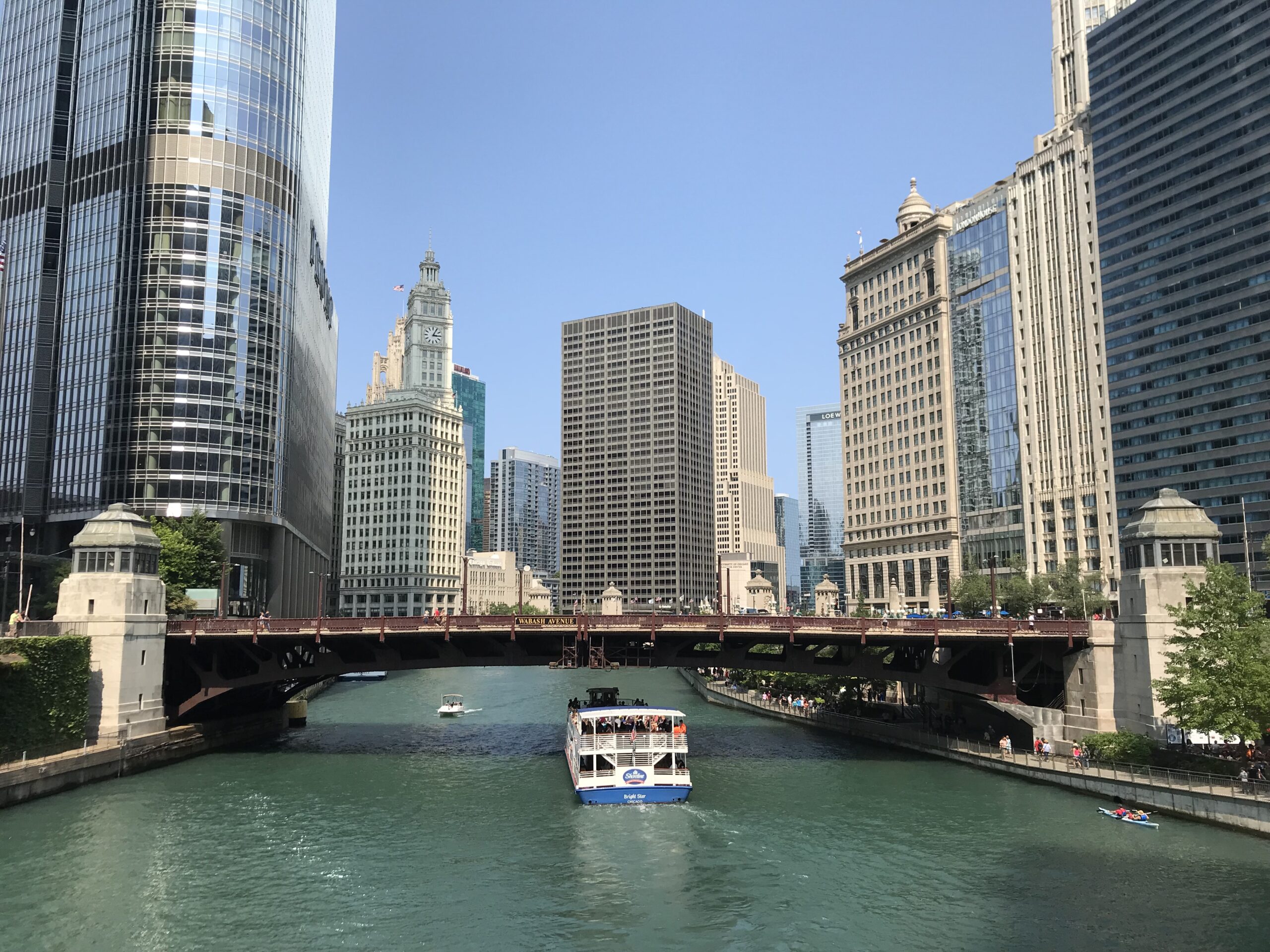
Today, the Chicago River is cleaner than it’s been in over a century. Fish have returned. People kayak on it. The Riverwalk is one of the city’s most beautiful public spaces. But the river still flows backwards, a permanent reminder of the time Chicago looked at a public health crisis and decided the best solution was to just change the direction of nature itself.
See Where It All Happened
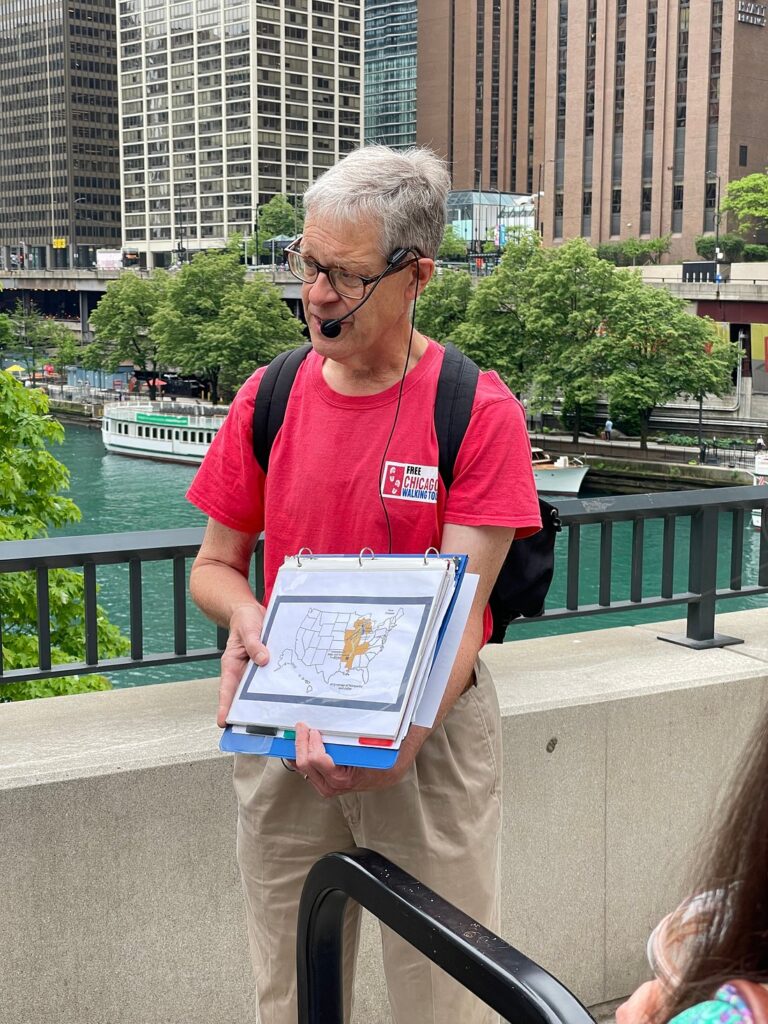
The story of the Chicago River reversal isn’t just history—it’s still visible everywhere along the Riverwalk. The engineering, the drama, the audacity of it all happened right here.
Join us on our Riverwalk History Tour to walk the same paths where engineers planned the impossible, see where the river’s flow was changed forever, and hear more stories about how Chicago became the city it is today.
Because in Chicago, we don’t just read about history. We walk through it.


